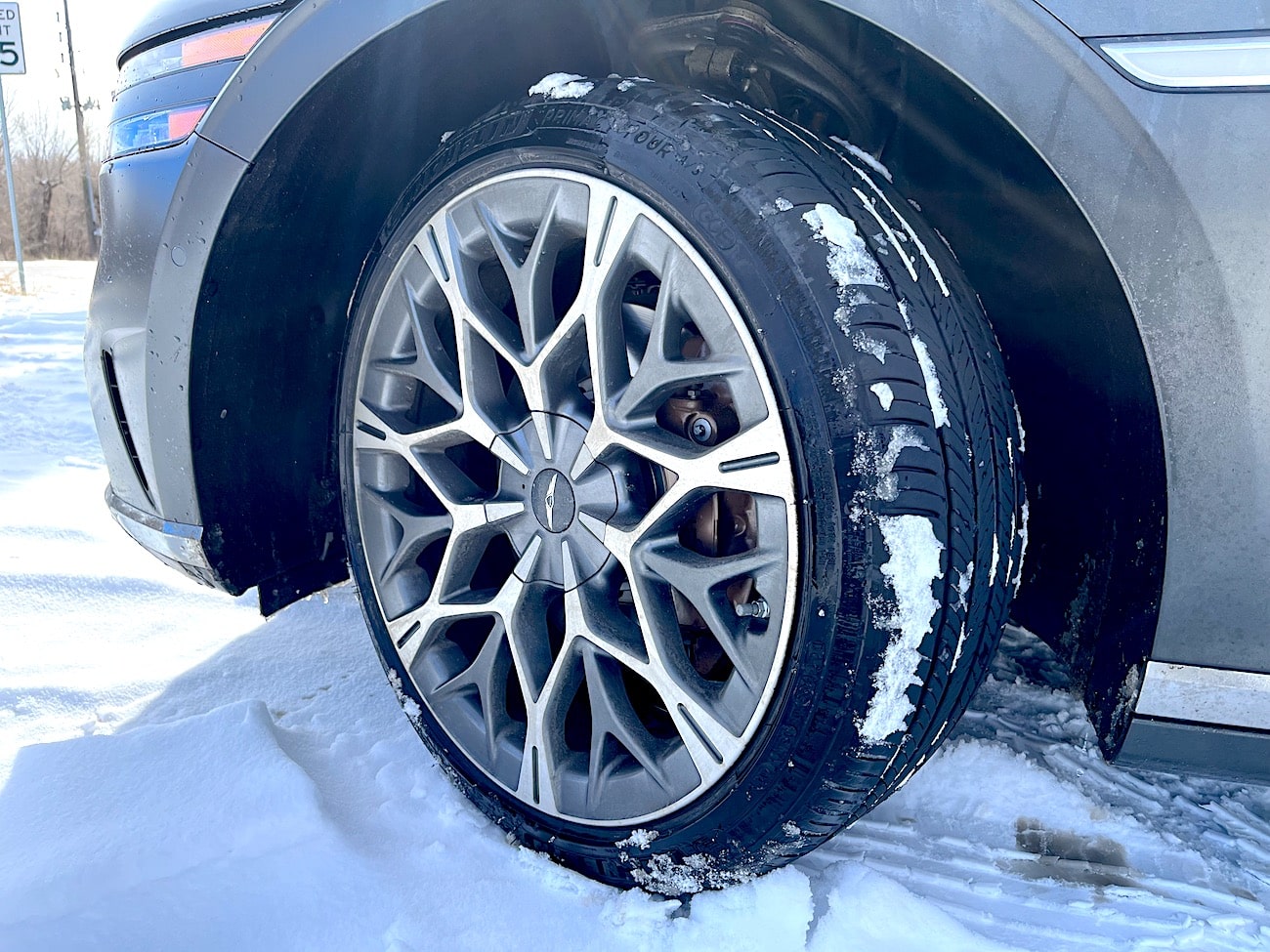
There is a comparatively low speed limit for winter tires, which you must not exceed. Find out everything you need to know here.
Maximum speed for winter tires: What’s behind it
Winter tires as well as summer and all-season tires are subject to speed limits. You must adhere to these, even if you are allowed to drive faster according to road signs.
- For summer tires, the maximum permissible speed of the tires must be at least as high as the maximum speed of the car entered in the vehicle registration document.
- These limits are lower for winter tires. This is why you are allowed to fit winter tires and all-season tires even if the permitted maximum speed is lower than the maximum speed of the car.
- However, you must then affix a sticker in the driver’s field of vision indicating the maximum speed of the tires.
What happens if you drive too fast on winter tires
Exceeding the maximum speed limit for a short time does not damage the tires, the limit values are designed in such a way that exceeding them does not immediately result in damage.
- Longer or frequent journeys well above the maximum permitted speed, however, can lead to serious damage to the tire.
- The high load can cause the tire tread to detach from the carcass, i.e. from the tire’s structure.

How fast can you drive with winter tires?
There are different maximum speeds for winter tires.
The tire speed index provides information about the permissible value. It is located on the sidewall of the tire behind the tire size. For example, if it says “195/65 R15 91V”, the “V” is the speed index. The following indices are common for winter tires:
- P: Up to 150 km/h
- Q: Up to 160 km/h
- R: Up to 170 km/h
- S: Up to 180 km/h
- T: Up to 190 km/h
- H: Up to 210 km/h
- V: Up to 240 km/h
- W: Up to 270 km/h