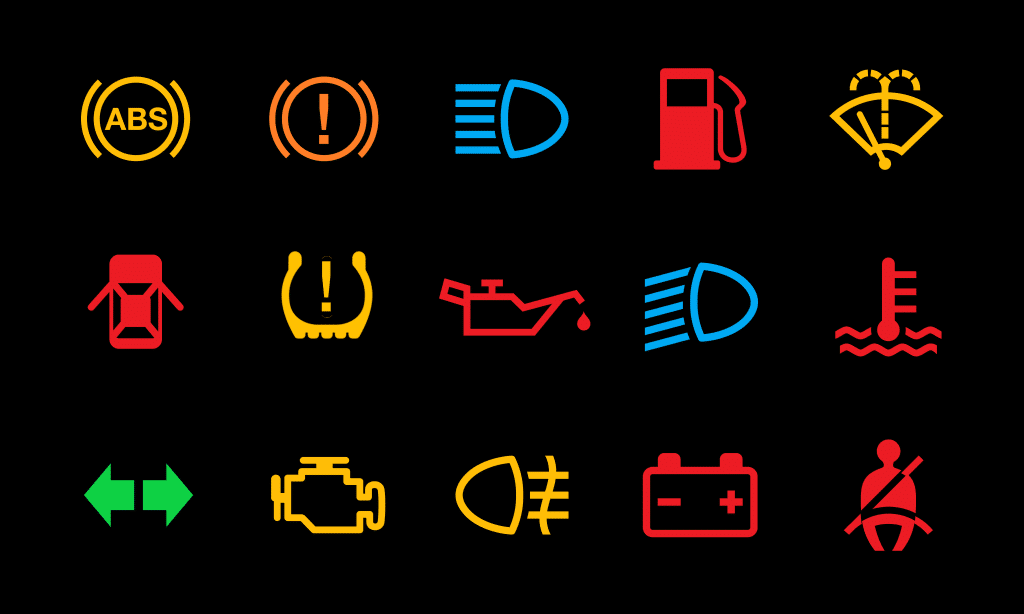
A warning light coming on in your car is no reason to panic—but it’s often a sign that you need to take action. Our guide shows you when you need to pull over immediately, which lights you should check right away, and what costs you might face. This way, you’ll know how to respond correctly in an emergency and avoid costly mistakes.
Suddenly, a warning light comes on in your car—but what does the symbol mean, how urgent is the problem, and can you keep driving? Whether red, yellow, or blue: each color indicates a different level of urgency. While red warning lights usually require you to stop immediately, yellow symbols often just mean you need to schedule a workshop appointment soon.
This guide explains, among other things:
- What a warning light is and what it means (including electric cars)
- Immediate actions – from “It’s safe to continue driving” to “Turn off the engine”
- Costs, repairs & legal consequences (vehicle inspection, insurance, fines)
What is a warning light? Definition & function
A warning light in a car is a visual signal that indicates technical problems, safety risks or maintenance needs. It differs from indicator lights (e.g., for high beams or turn signals) in terms of color and urgency:
- Red: Immediate action required (e.g., engine oil, brakes)
- Yellow/Orange: Action required (e.g., exhaust warning light, tire pressure)
- Green/Blue: Information (e.g., cruise control, lane assist)
Warning lights are required by law and part of the On-Board Diagnostic (OBD) system. They warn of:
- Safety risks (e.g., brake failure, airbag defect)
- Environmental damage (e.g., elevated exhaust emissions)
- Costly consequential damage (e.g., engine damage due to low oil levels)
Most warning lights are located in the instrument cluster behind the steering wheel. Usually, the symbols light up next to the speedometer or tachometer. Especially in internal combustion engines, they often light up briefly when the engine starts. If everything is okay, however, they go out immediately afterward.
In modern vehicles, they are also displayed in the head-up display or the display in the center console . Here, the messages tend to be more detailed and fully worded, such as “Please visit a service center” or “Please refuel.”
Tip: You can find the exact meaning of the symbols in the vehicle manual or via manufacturer apps (e.g., BMW ConnectedDrive, Mercedes me).
The color of a warning light indicates the urgency. Here are the most important categories:
Red warning lights: Immediate action & hazards
Red warning lights indicate imminent hazards to the vehicle, occupants, or the environment. They require immediate action – in most cases, this means: stop the vehicle, turn off the engine, and contact roadside assistance . Do not ignore these lights: They pose safety risks, can lead to costly consequential damage, or even cause accidents.
Important: The exact symbols may vary depending on the vehicle model and manufacturer. If in doubt, consult the owner’s manual or search online using the exact symbol.
Yellow warning lights: Urgent action required
Yellow warning lights indicate problems that need to be resolved promptly. They do not require you to stop immediately, but you should visit a repair shop within a few days. Do not ignore these lights either: The problems can worsen and lead to higher repair costs or safety risks.
Blue & green lights: Information & notifications
Blue and green lights are not warnings, but rather indicators of active systems or information. They do not require action, but may indicate malfunctions if they come on unexpectedly.
Examples:
- Blue light (high beams): High beams are activated
- Green light (cruise control): Cruise control is on
- Green light (lane assist): Lane Keeping Assist is active
If a green or blue light suddenly flashes, this may indicate a problem with the system (e.g., Lane Assist is not recognizing the lane). In this case, you should check the function or visit a repair shop.
Warning light in the car: What to do? Immediate actions & next steps
A warning light that comes on often causes uncertainty: Can I keep driving? Do I have to stop immediately? And how much will the repair cost? This section explains specifically how you should proceed for each warning light and what mistakes you need to avoid.
Step-by-step guide: How to respond correctly
Regardless of the color of the warning light, the rule is: Stay calm and proceed systematically. The following guide will help you assess the situation correctly.
Step 2: Stop the vehicle safely
- Red warning lights: Stop immediately in a safe place (e.g., parking lot, shoulder) and turn off the engine.
- Yellow warning lights: Continue driving, but visit a repair shop as soon as possible.
- Blue/green lights: No action required; these are merely informational.
Step 3: Perform an initial check based on the illuminated symbol
- Engine oil (red oil can): Check the oil level with the dipstick (only when the engine is cool!).
- Coolant (red thermometer): Open the coolant reservoir (only when the engine is cold!) and check the level.
- Tire pressure (yellow tire symbol): Check the pressure at the nearest gas station.
- Battery (red battery symbol): Turn off all electrical devices (e.g., air conditioning, radio).
Step 4: Contact a repair shop or roadside assistance
- Red warning lights: Call roadside assistance (e.g., ADAC, ACE) or have the vehicle towed.
- Yellow warning lights: Schedule an appointment at a repair shop within the next few days.
- Blue/green lights: No action required – unless the light is flashing or indicates a malfunction.
Step 5: Don’t ignore warning lights!
Even if the light goes out after restarting the engine, you should have the cause investigated. These are often temporary faults that can lead to costly damage later on.
When can I keep driving – and when shouldn’t I?
Not every warning light requires you to stop immediately. The following overview will help you assess the urgency:
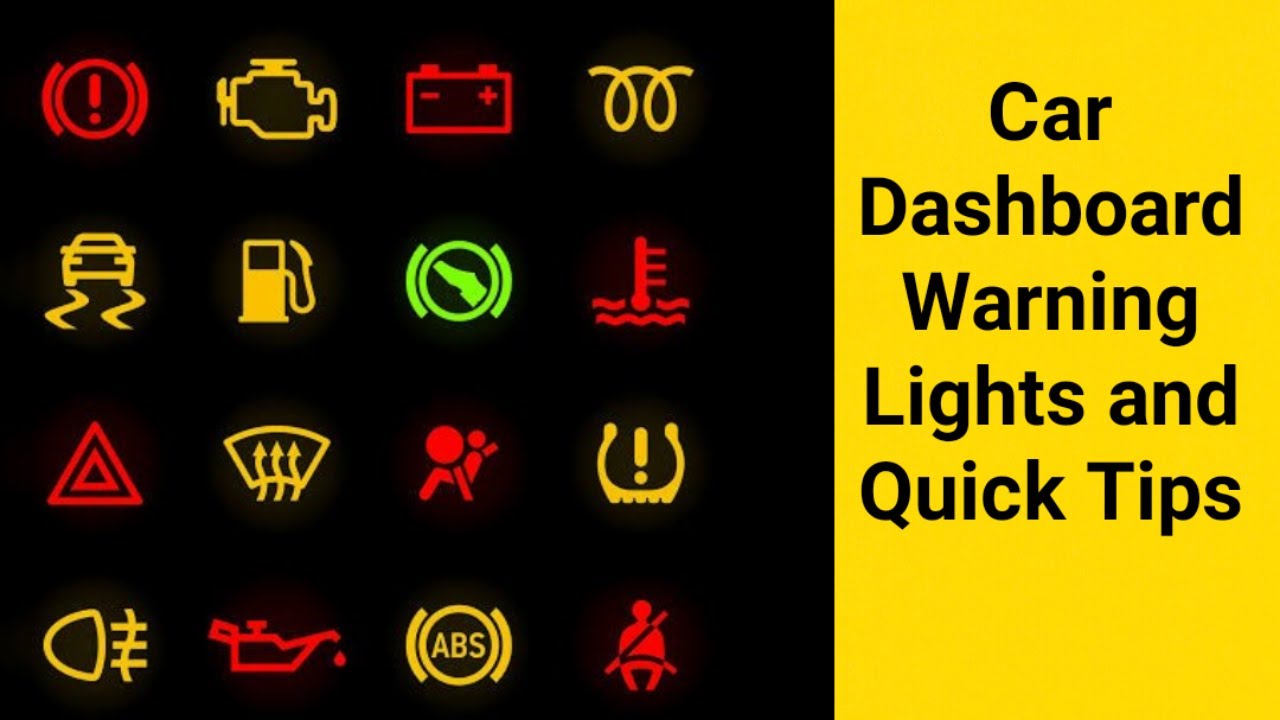
Costs: What can I expect?
The cost of fixing a warning light naturally depends on the specific cause and the vehicle model in question. The following table provides an overview of typical repair costs:
Warning lights in electric cars: What’s different?
As far as colors are concerned, there is no difference between electric cars and internal combustion engine vehicles. Your response should therefore be in line with the recommendations given above.
Electric cars do, however, have their own warning lights in some cases, which may differ from those in internal combustion engine vehicles due to their design. While classic symbols such as oil level or coolant are omitted, new warnings have been added—for example, for battery, charging system, or high-voltage electronics. So, to be on the safe side, take a look at the owner’s manual to familiarize yourself with the most important ones in case of an emergency.
Legal Aspects: What Does the Law Say?
A warning light coming on is not just a technical problem; it can also have legal consequences. Whether it’s a TÜV sticker, insurance coverage, or fines—this section explains your obligations as a driver and what happens if you ignore warning lights.
Driver’s obligations regarding warning lights
According to the Road Traffic Regulations (StVO) and the Road Traffic Licensing Regulations (StVZO), drivers are obligated to keep their vehicle in a roadworthy condition . Warning lights help you assess this. If you continue driving despite red lights, you are violating §23, paragraph 2. It states:
If you cause an accident due to a defective brake, for example, and it turns out that you ignored the corresponding warning light, you could face criminal consequences in the worst case. You may also lose your insurance coverage and, under certain circumstances, be left with high costs. This is regulated by § 81 of the Insurance Contract Act.
If you ignore red or yellow warnings, they will come back to haunt you at the latest during the next vehicle inspection . This is because TÜV, Dekra and similar organizations check your car’s roadworthiness during this inspection. Defects will result in you not receiving an inspection sticker. If you do not rectify the defects, the vehicle’s operating permit will expire. Typically, the following warning lights indicate that you must make repairs in order to receive the inspection sticker:
- Brake warning light (red)
- Airbag warning light (red)
- Exhaust warning light (yellow)