Living plastic-free is all the rage. While Tupperware and other plastic containers are practical, they also have environmental drawbacks. However, there are good alternatives to plastic.
Plastic-Free Container Alternatives
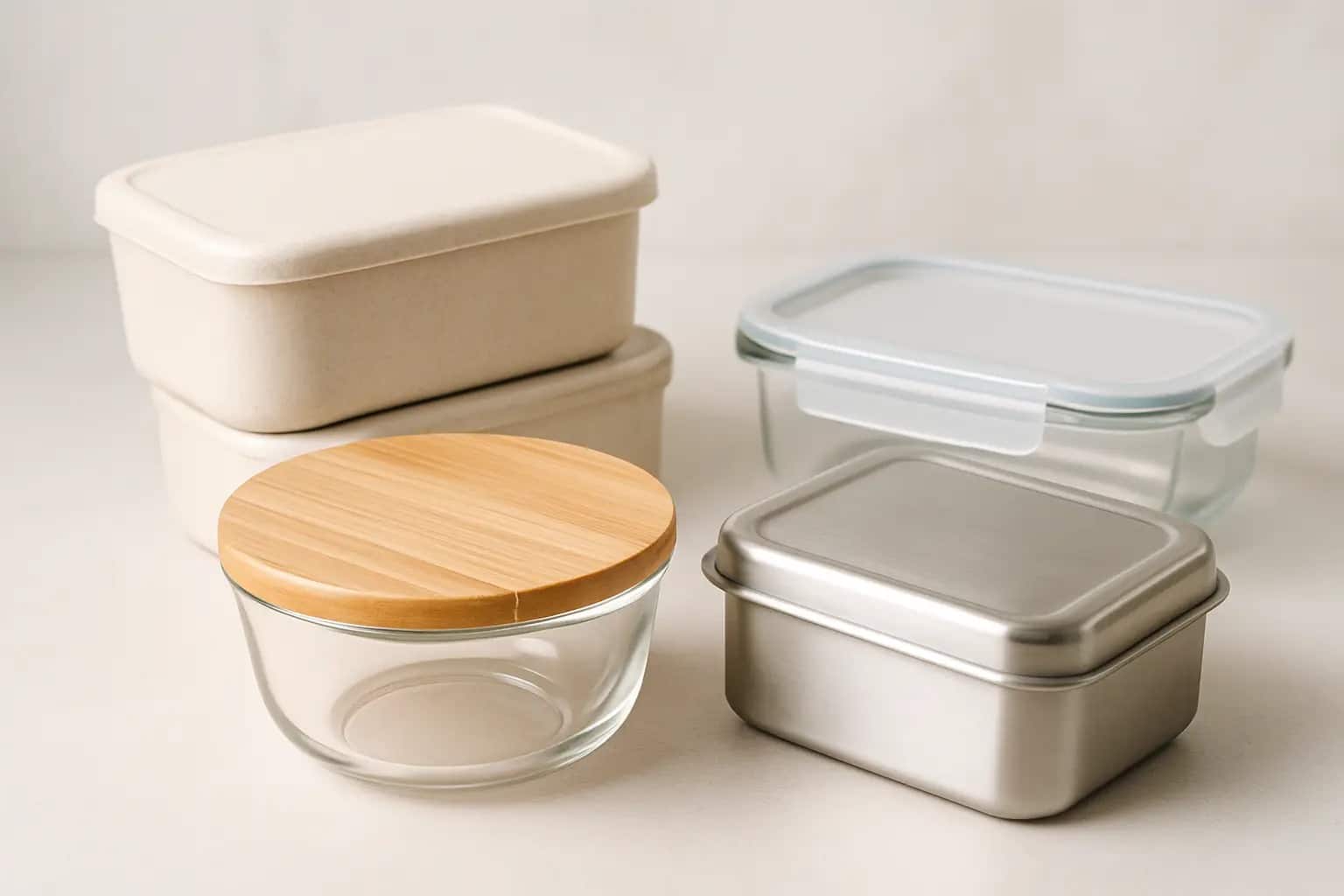
To store food supplies or leftovers from your last meal, you can easily switch to containers made of glass, ceramic, or similar materials. If you need a shatterproof container for transporting sandwiches and the like, there are alternatives here as well.
- Glass storage jars have a major advantage: you can see right away what’s inside. They’re best when the lid has a rubber seal, as is the case with Weck jars. This ensures your supplies are well protected from pests and moisture.
- Another stylish alternative: ceramic containers or dolomite jars. The lids—or even the entire jar—can be made of bamboo, for example. In addition to their positive environmental impact, they add a decorative touch to your kitchen.
- Storing leftovers in the refrigerator works just as well in ordinary empty jam and canning jars. You can even get these “for free.” You can also freeze food in them. Be sure to fill the jars only two-thirds full.
- As an alternative to plastic water bottles, there are already numerous glass bottle options available. For children or for safety in a backpack while on the go, they’re also available with a protective sleeve.
- If you choose not to use Tupperware containers, you don’t have to switch to paper bread bags. There are eco-friendly and fair-trade cotton bread bags. You can use them as often as you like and give them a quick rinse in between uses if necessary.
- To pack lunches that include vegetables and fruit, you can use shatterproof containers made from renewable raw materials. They’re eco-friendly and made from an innovative material (biopolymer) derived from sugarcane molasses, natural minerals, and waxes.
- An even more natural way to take your meals on the go or pack a snack for your break is to use wooden containers. These wooden containers are real eye-catchers and really whet your appetite for what’s inside.
- It’s also best to use glass containers when reheating food in the microwave.
- Plastic cutlery isn’t necessary either: There’s now a wide range of alternative spoons, forks, and salad servers made of wood. Or you can use stainless steel.
Comparing Tupperware’s Sustainability
Of course, Tupperware and similar companies aren’t complete environmental outliers. Most companies adhere to certain contemporary environmental standards and set goals regarding sustainability and health. Tupperware, for example, emphasizes the following:
- According to the manufacturer, all Tupperware products have been BPA-free since 2013. Products manufactured before that time may still contain traces of BPA, though the harmful substance dissipates after a certain period of use anyway.
- Tupperware takes back discarded products and recycles the material. Kitchen roll holders and bottle holders, for example, are made from 50 percent recycled material.
- According to reports, lower-grade recycled material finds its way to other companies, e.g., for the production of flower pots.
- 80 percent of Tupperware sold in Europe is also produced in Europe. This eliminates the need for long-distance transport of finished goods.
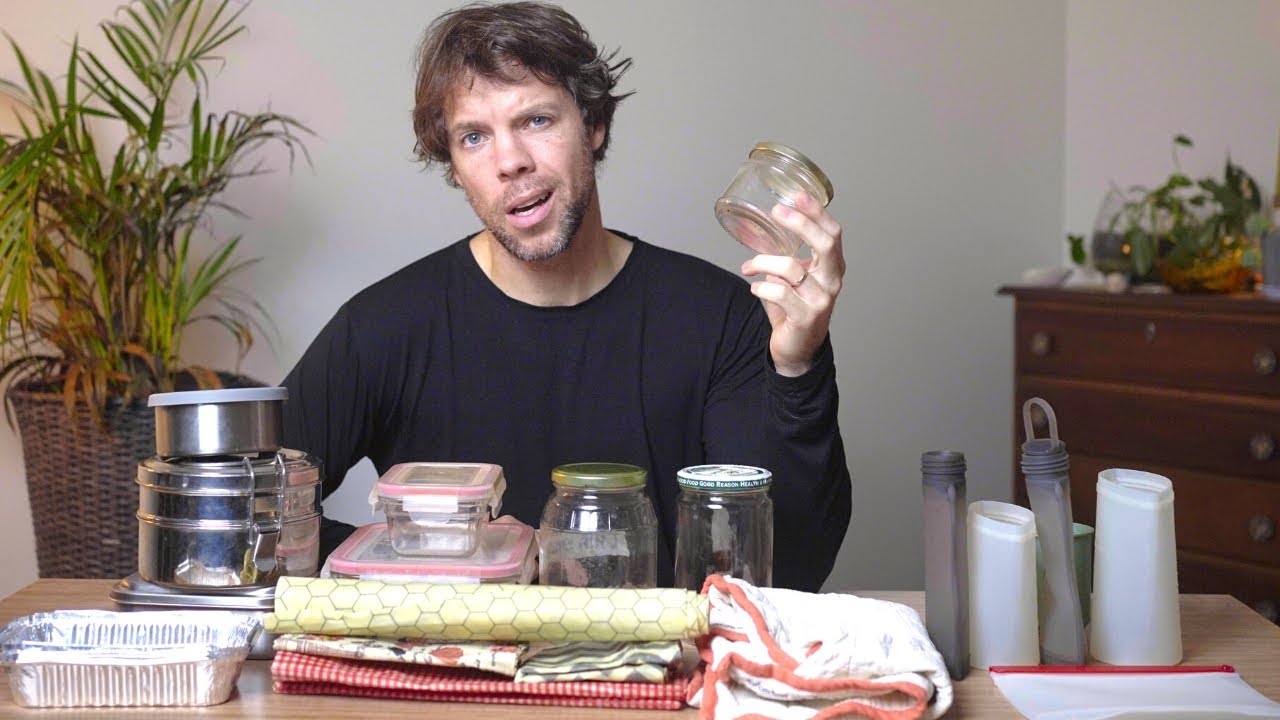
Tupperware lasts a long time—but is made from petroleum
Tupperware is synonymous with plastic lunchboxes, bowls, and camping tableware. However, you should decide whether purchasing such products is advisable based on your environmental standards.
- The advantage of Tupperware & Co: You can safely store food for extended periods and keep it fresh. Some containers are even suitable for reheating food in the microwave.
- But there are also disadvantages. For example, production depletes petroleum reserves. The materials polyethylene (PE) and polypropylene (PP) are synthesized from alkenes (ethene, propene) derived from fossil fuels.
- Manufacturers sometimes also use polycarbonate (PC) for water bottles and micro-sized tableware. For a long time, this was produced using bisphenol A (BPA), a hormone-disrupting toxin. You should avoid this substance whenever possible.
- What is an advantage on the one hand becomes a decisive disadvantage on the other: PP, PE, and PC materials are extremely resistant to decomposition. As a result, such containers contribute to the long-term growth of plastic waste worldwide.
- Conclusion: You can help reduce environmental impact by continuing to use your existing containers but opting for alternatives when purchasing new ones.