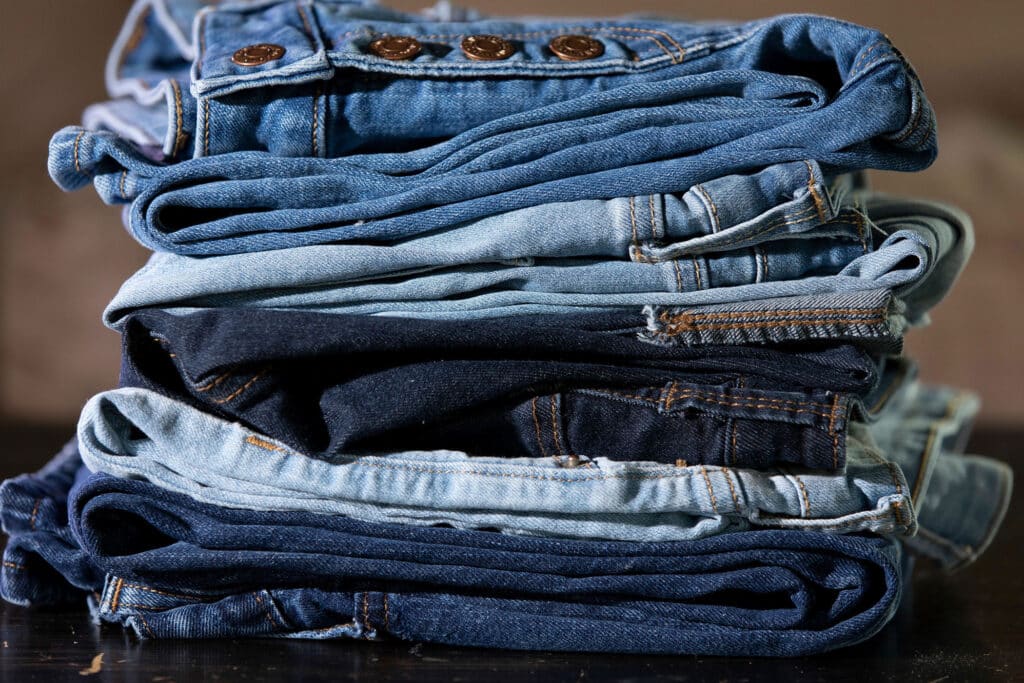
Dyeing jeans is generally possible, but it can alter the typical denim look, especially with classic blue jeans. With fashion-treated or less distinctive styles, the effect is usually much less noticeable.
What You Absolutely Must Keep in Mind Before Dyeing Your Jeans
In general, dyeing jeans with chemical dye is easy and usually works without any problems. The only sticking point is the seams of the jeans. Depending on the material of the thread, it may not absorb the dye, or the color result may turn out slightly different—namely, significantly lighter.
- If you want to dye a pair of blue jeans, you risk the denim cotton fabric losing its characteristic appearance. As a result, the fabric loses exactly what makes the jeans so appealing.
- A special weaving technique is used for the denim fabric typical of blue jeans. The denim fabric consists of so-called warp threads and weft threads. The warp threads are the threads that are woven in the longitudinal direction. The weft threads, on the other hand, run in the transverse direction.
- To ensure that the jeans retain their characteristic style, only the warp threads are dyed blue. The weft threads on the inside of the fabric remain undyed. The white threads then shimmer slightly through the blue threads.
- This technique gives jeans their look, which has been popular for over 100 years now. By the way, the obligatory fifth pocket on the jeans is also part of the authentic look.
- If you use a chemical dye, the white threads will also be dyed and the jeans will lose their typical appearance.
Dyeing jeans: How to do it
The dyeing process itself is very simple. You can dye the jeans in the bathtub or the washing machine, though the washing machine is definitely the better option.
- Refer to the specific dye product for exact instructions. Often, you’ll need table salt in addition to the dye.
- Follow the manufacturer’s instructions regarding how much dye you need to achieve your desired result. The packaging always features a color chart that you can use as a guide.
- Note: Be realistic when dyeing. Dyeing yellow jeans black is no problem, but the reverse is.
- After dyeing the jeans, either wash them with clothes of the same color or run the washing machine through a rinse cycle. While this isn’t strictly necessary, it’s better to be safe than sorry.
Dyeing jeans with plant-based dyes: The slightly more involved method
If you want to preserve the typical look of jeans at least to some extent, you should try your hand at plant-based dyes.
- Indigo blue is a plant-based dye that was used to dye the very first jeans. If you’ve ever wondered where the expression “to turn blue” comes from, you’re very close to the answer here.
- However, the dyeing process is significantly more labor-intensive and is generally not done in the washing machine.
- If you’re very attached to your jeans, you should seek advice from a specialty store. Once the jeans are dyed, you can’t undo the result. Bring the jeans with you to the consultation so the expert can better assess which dye will give you the best result.
- If this seems like too much effort, simply dye the blue jeans black. You can’t go wrong with this color.