188
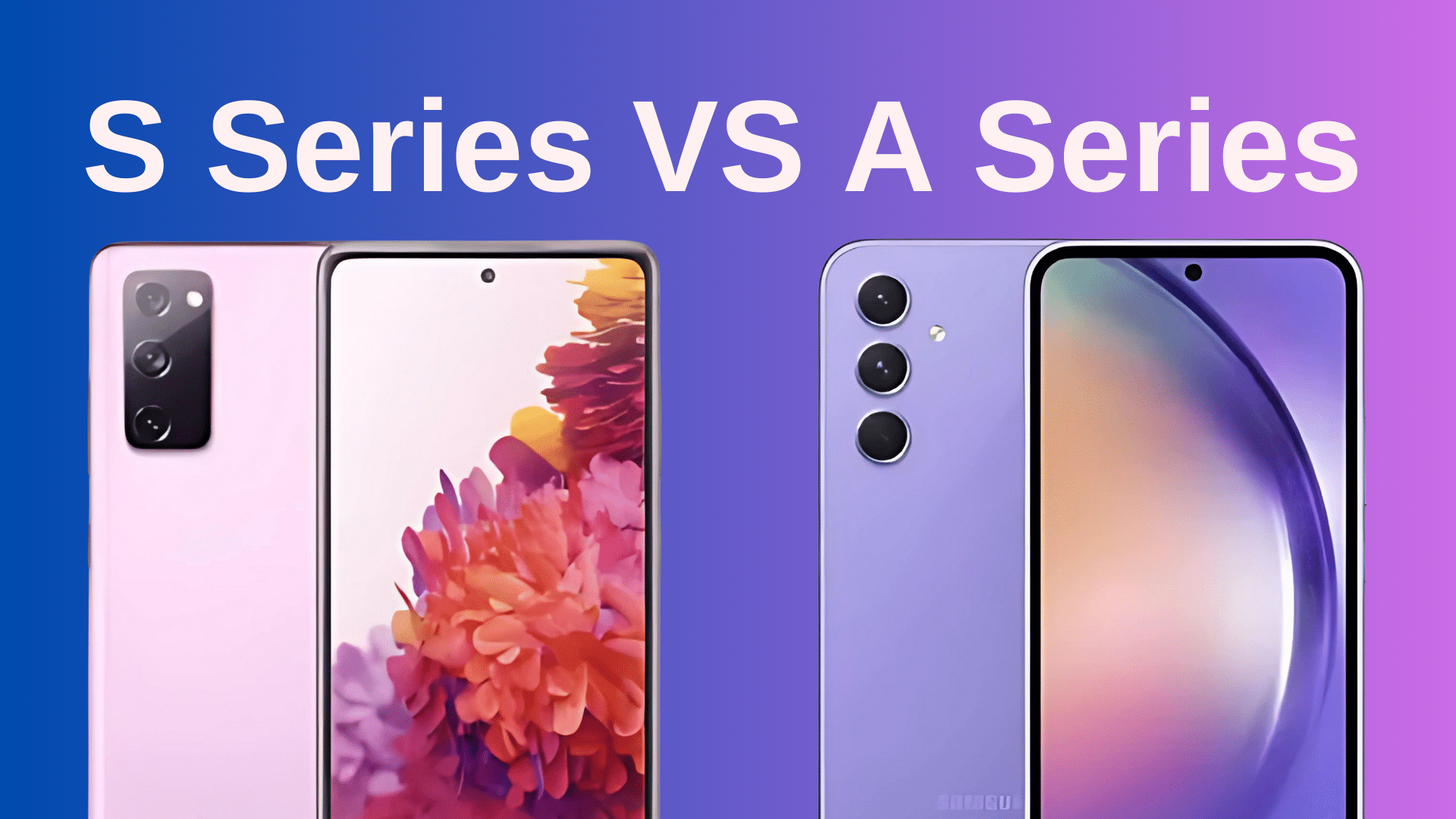
The Samsung Galaxy S is the manufacturer’s flagship model, while the A-series stands out for its excellent value for money. But there are other differences as well.
Samsung Galaxy S and A: The Difference
The Samsung Galaxy S and A models differ significantly in terms of technology, price, and target audience.
- Target Audience and Price: The S series is Samsung’s premium flagship line with high-end features and correspondingly higher prices. The A-series, on the other hand, offers mid-range and entry-level models with a good price-to-performance ratio.
- Display quality: The S models use Dynamic AMOLED 2X with higher resolution, better brightness, and an adaptive 120-Hz refresh rate for smooth gaming. The A-series models do have good AMOLED panels, but they often feature lower refresh rates and less accurate color reproduction.
- Camera Performance: The S series features professional camera systems with larger sensors, optical zoom (up to 10x on the S Ultra), and better video capabilities. The A-series offers solid everyday cameras, but often lacks a telephoto lens or features less capable macro/depth sensors.
- Processor and Performance: The S-models feature top-of-the-line chips (Snapdragon 8 Elite/Exynos 2400) for maximum performance, while the A-series uses slower processors (e.g., Exynos 1380)—sufficient for everyday use but less suitable for high-end gaming.
- Battery and Battery Life: The A-series stands out with larger batteries (up to 5,000 mAh) and more power-efficient processors, which allow for longer battery life. The S models have smaller batteries (e.g., 4,000 mAh on the S24), which drain faster with heavy use.
- Additional Features: The S series features IP68 protection, S Pen support (on Ultra models), and wireless charging. The A series offers a microSD slot (on many models), but only IP67 protection (on top-tier A models) or no protection at all on entry-level models.
- Software support: The S Series receives 4 Android updates and 5 years of security updates, while only premium A Series models (e.g., A55) are supported for the same length of time. Entry-level A Series phones often receive only 2 Android updates.
- Conclusion: The S Series is for users who want the best performance, camera, and features, while the A Series combines affordability with solid everyday usability.

Top Model at a Glance
The following models will be available on the market in 2025.
- The Galaxy S25 is part of the Samsung Galaxy S series and, in 2025, one of the flagship models. The model is available for 899 euros (128 GB), 959 euros (256 GB), and 1,079 euros (512 GB). Features: 6.2-inch AMOLED display, 50-MP camera, 4,000-mAh battery, AI assistant (multimodal AI).
- Galaxy S25 Plus: This model is available for 1,149 euros (256 GB) or 1,269 euros (512 GB). Features: Larger display, better cooling, faster charging.
- The Galaxy S25 Ultra costs 1,449 euros (256 GB), 1,569 euros (512 GB), or 1,809 euros (1 TB). Features: 200-MP camera, S Pen support, titanium body, Snapdragon 8 Gen 4 chip.
- The Galaxy A56 from the Samsung Galaxy A series is classified as mid-range in 2025. It costs 479 euros (8/128 GB) or 529 euros (8/256 GB). Features: 6.6″-AMOLED, 50-MP camera, 5,000-mAh battery, Google Gemini AI (no Galaxy AI).
- The Galaxy A36 is available for 379 euros (6/128 GB) or 449 euros (8/256 GB). Features: A balance between price and performance, microSD slot.
- The Galaxy A26 costs 299 euros (6/128 GB) or 369 euros (8/256 GB). Features: Entry-level model with long battery life, but a weaker processor.