565
Let there be light! We explain how a bicycle dynamo works in this practical tip.
Energy transmission to the dynamo
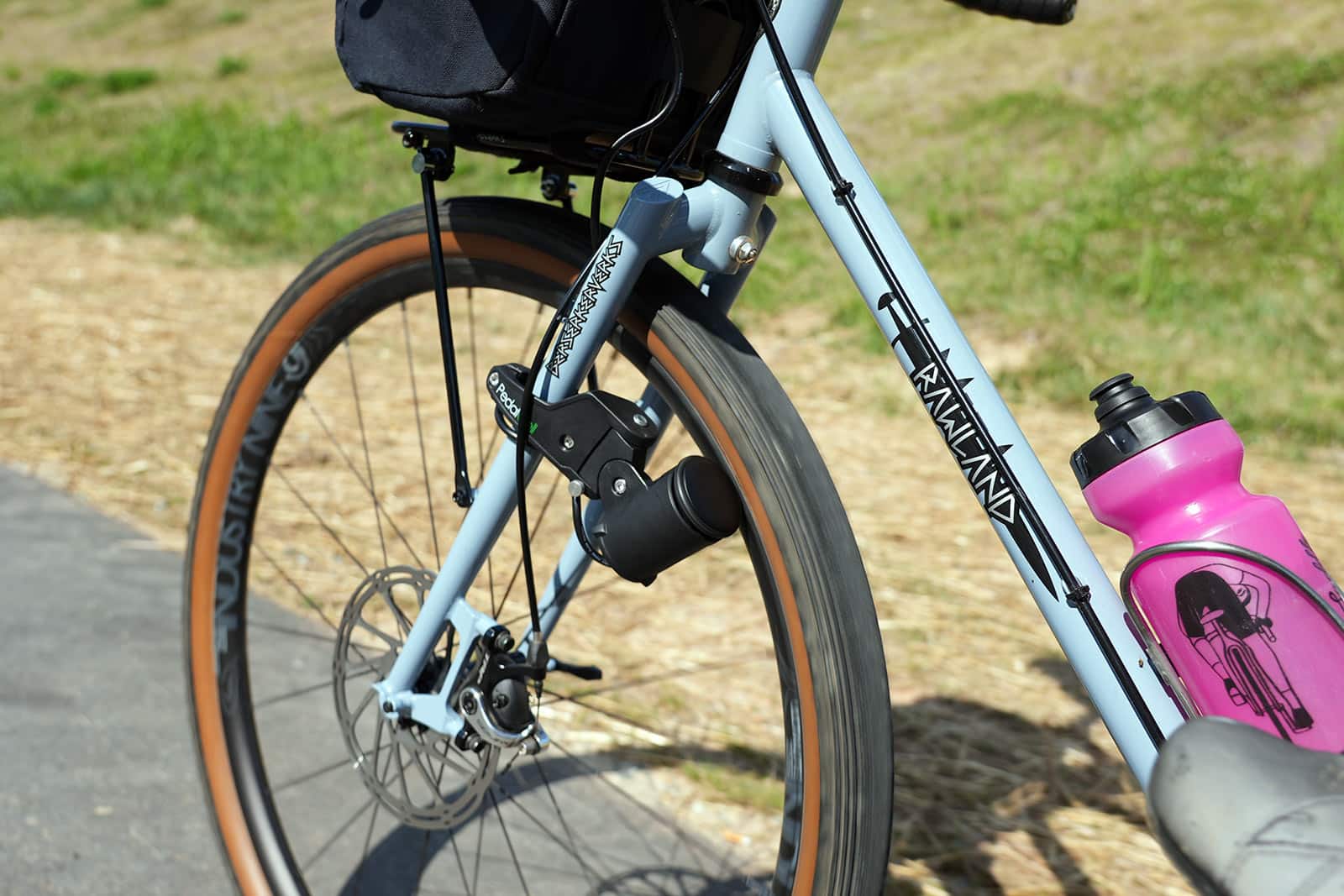
Strictly speaking, the dynamo is a bicycle dynamo. As a cyclist, you transfer part of your energy to the dynamo, which in turn supplies your bike light with energy:
- At the start of the chain, you pedal and initiate a movement with your power.
- The kinetic energy, also known as “kinetic energy”, is transferred to the wheel.
- The wheel turns. The kinetic energy of the wheel is also called “rotational energy”.
- The rotation of the wheel turns your dynamo, so it carries part of the rotational energy.
- The dynamo is a converter. It converts rotational energy into electrical energy.
- The electrical energy in turn feeds the light bulb.
How a dynamo works
And this is how the dynamo converts the rotational energy of the wheel into electrical energy:
- The wheel of the dynamo touches the wheel of your bike and thus turns itself.
- A multi-pole magnet is connected to the wheel and rotates with it.
- You can see poles of different orders in a YouTube video .
From second 50 you can see the rotating octopole, the typical multipole magnet in the bicycle dynamo. Here the north pole is blue and the south pole is red. - You can see that the magnetic field of a rotating multipole magnet is constantly changing. If you stand still next to the magnet, the north and south poles alternately pass you by.
- In the dynamo, the magnet is surrounded by a wound wire: a “coil”. The magnetic field now induces an alternating voltage in the coil.
- Induction here means that the force of the magnetic field is transferred to the charge in the metal, the so-called “Lorenz force”. Electrons move, current flows.
- One end of the coil leads to the light bulb, the other to the dynamo housing. The alternating voltage makes the bulb light up.