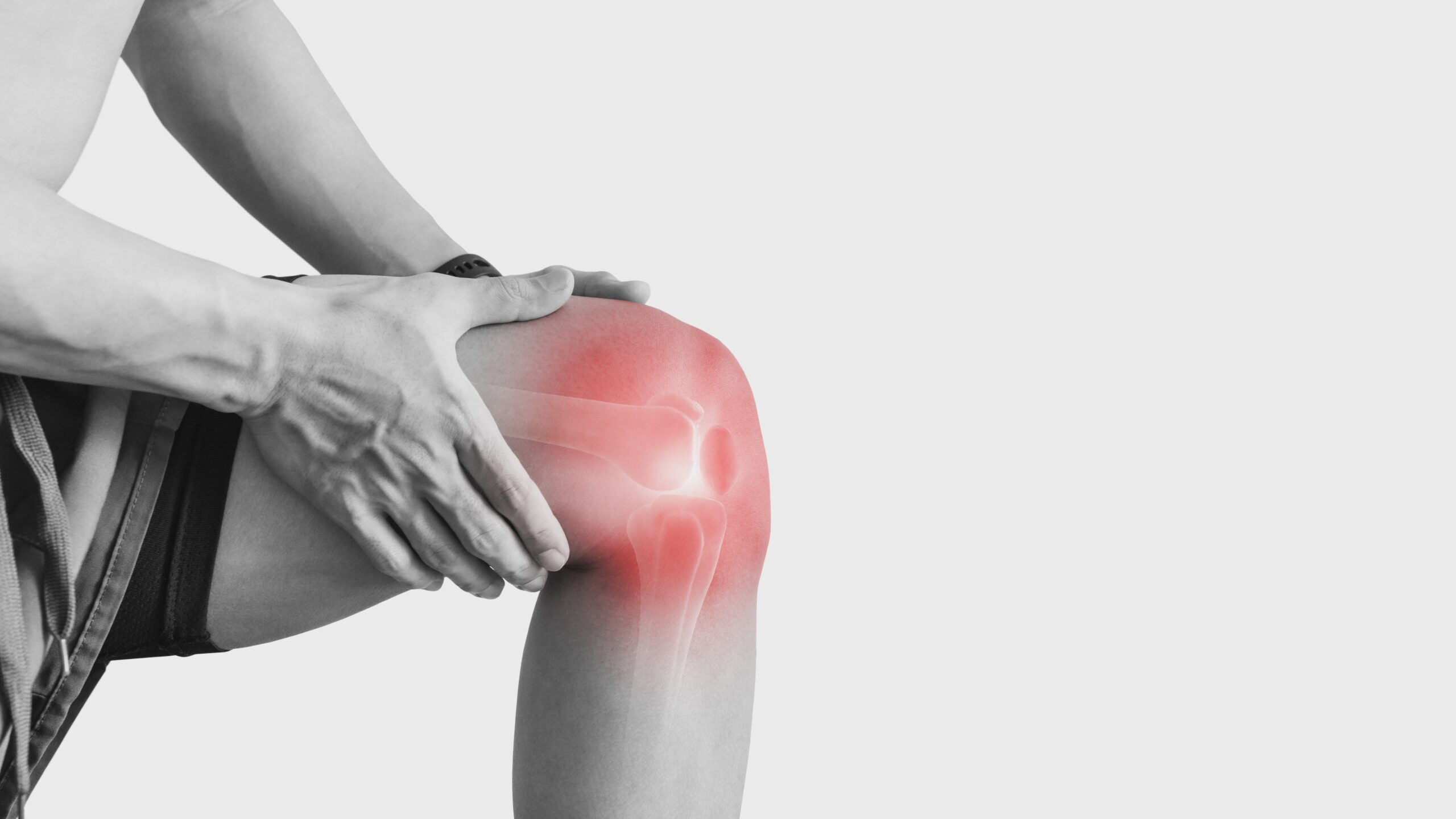
Joint pain can range from wear and tear to inflammation and serious medical conditions, and should be taken seriously. This guide covers warning signs, emergencies, and treatment options.
What is joint pain?
Together with bones, muscles, fascia, and many other tissue structures, the joints form the musculoskeletal system. This system is crucial for the body’s mobility and stability. According to the German Pain Society, the musculoskeletal system is one of the most common sources of both acute and chronic pain, which is often attributable to joint disorders.
When it comes to joint pain, a fundamental distinction is made between arthralgia and arthritis &n While arthralgia involves pain alone, arthritis—that is, inflammation of the joint—is usually accompanied by additional symptoms. These include, in particular, swelling due to fluid accumulation in the joint, localized warmth, and sometimes redness of the overlying skin. The symptoms may be movement-dependent or persist at rest. Furthermore, the number of affected joints provides important diagnostic clues: A distinction is made between monoarticular (affecting a single joint) and polyarticular (affecting multiple joints) symptoms, which can indicate the underlying causes.
The most common causes of joint pain
Joint pain is often due to wear and tear or inflammatory conditions. However, there are other possible triggers that can vary depending on age, lifestyle, and medical history. An overview of the main causes:
Wear and tear and osteoarthritis
Joint wear and tear is the most common cause of joint pain, especially in older adults. It is a degenerative, non-inflammatory condition in which the joint cartilage gradually breaks down. In the early stages, pain occurs mainly during physical activity; later, it can also occur at rest or persistently, for example at night. Associated symptoms such as stiffness, limited mobility, or joint noises (cracking or grinding) are also typical.
Chronic inflammatory diseases
These include inflammatory rheumatic diseases such as rheumatoid arthritis. In this condition, the immune system attacks the body’s own tissue, leading to progressive joint destruction and persistent pain.
Injuries, overuse, and improper loading
Acute joint pain in a single joint is often caused by strains, sprains, or contusions. These can occur, for example, during sudden movements, falls, or athletic activities. Younger or physically active people, whose joints are subjected to greater stress in daily life or during exercise, are particularly affected. However, improper strain at work or in daily life—such as from repetitive movements, improper lifting, or prolonged standing—can also overtax the joints and cause pain. Such symptoms usually occur suddenly, are localized, and can often be relieved by rest, cooling, or targeted physical therapy. However, if the pain persists for a longer period or is particularly severe, it is essential to seek medical advice to rule out serious injuries.
Infections and Infectious Diseases
If bacteria enter a joint via the bloodstream or through injuries, so-called infectious arthritis can develop. This is a medical emergency, as the joint can be damaged rapidly. Viral infections such as the flu, COVID-19, or travel-related illnesses like Chikungunya fever can also cause joint pain. Additionally, bacterial infections of the intestines and urinary tract are potential triggers. As a result, reactive arthritis may develop, in which symptoms (typically in leg joints such as the knee) occur with a delay and sometimes migrate from joint to joint.
Menopause
Hormonal changes during menopause can contribute to joint pain in women. In particular, declining estrogen levels are suspected of reducing a protective effect on the joints and affecting fluid balance. However, this theory has not been conclusively proven scientifically, as the Orthopedic Joint Clinic reports.
Other causes
In children, juvenile idiopathic arthritis can lead to joint pain. Other triggers include metabolic disorders such as gout, medications, blood clotting disorders, and fibromyalgia syndrome.
Symptoms of joint pain: When to see a doctor, when it’s an emergency?
Typical symptoms of joint pain
Joint pain can manifest in many different ways. Those affected report, among other things, burning or stabbing sensations, as well as throbbing or dull pain. In medical classification, the time of onset also plays an important role:
- Start-up pain: typically occurs in the morning after getting up or after prolonged periods of rest
- Stress pain: is particularly noticeable during movement or physical activity
- Rest pain: occurs mainly at rest, often at night
As a general rule: Persistent or recurring joint pain should be evaluated by a doctor, especially if it worsens or limits your mobility.
Warning signs: When should you seek medical advice?
Not every joint complaint is an immediate emergency, but there are symptoms that warrant a prompt visit to a doctor. These include, for example:
- Joint pain that lasts for days or recurs repeatedly
- Increasing stiffness or limited mobility
- recurrent swelling of one or more joints
- pain that significantly interferes with your daily life
In these cases, a medical evaluation is advisable to determine the cause and initiate appropriate treatment.
Signs of an emergency: When immediate medical help is needed
Certain symptoms associated with joint pain may indicate a serious or acute condition requiring treatment . Seek immediate medical help (emergency services/emergency room) if, in addition to joint pain, one or more of the following symptoms occur:
- sudden onset, severe pain in one or more joints
- pronounced swelling, redness, and warmth in a joint
- significantly limited mobility of the affected joint
- fever, chills, unintentional weight loss or profuse sweating
- severe general feeling of illness
- pain in the chest area
- shortness of breath
In such situations, immediate medical advice should be sought in order to identify and treat serious causes—such as infections, acute inflammation, or cardiovascular diseases—at an early stage.
Joint pain in the fingers: What lies behind osteoarthritis in the hand
Pain in the fingers often affects individual joints and is frequently due to early-stage wear and tear. In some people, joint cartilage may age more quickly than in others – influenced by genetic factors or hormonal changes, such as during menopause. In addition, inflammatory processes in the body, for example as a result of allergies, intolerances, or autoimmune diseases, can influence both the frequency and duration of symptoms. Generally, three forms of finger osteoarthritis are distinguished:
- Heberden’s osteoarthritis: Affects the distal finger joints
- Bouchard’s osteoarthritis: Affects the middle joints and occurs primarily in older people, predominantly in women
- Rhizarthrosis: Affects the thumb saddle joint
The distal and middle finger joints are most commonly affected. If multiple finger joints are affected simultaneously, specialists refer to this as finger polyarthrosis. As the disease progresses, the protective layer of cartilage in the joint gradually thins. Fine cracks form in the cartilage surface, and worn-away cartilage particles can accumulate in the joint space. These irritate the synovial membrane and lead to painful inflammatory reactions. In advanced stages, the bone surfaces rub directly against each other, which significantly intensifies the pain. In response to the loss of cartilage, the body produces more bone tissue. This results in the nodular thickenings typical of finger osteoarthritis at the joints, which can be observed in most affected individuals.
Finger osteoarthritis manifests through other typical symptoms. In addition to swollen joints, there is redness and pain, which intensifies with activity. At the same time, finger mobility gradually decreases. Many patients also report pronounced discomfort in the morning, particularly the typical start-up pain after getting out of bed. As the condition progresses, there may be a noticeable loss of strength in the hand. Everyday activities, such as grasping or lifting heavier objects, become increasingly difficult and are often associated with pain. The distribution by gender is also striking: women are affected significantly more often than men. According to estimates, around 90 percent of patients are female, with the condition predominantly occurring in middle age.
Finger osteoarthritis is a common cause of joint pain in the hands and results from the progressive wear and tear of the joint cartilage. It is influenced by factors such as genetics, hormonal changes, and inflammatory processes in the body. The most commonly affected joints are the distal and middle finger joints, as well as the thumb saddle joint. Typical symptoms include pain—especially during activity and in the morning—swollen and reddened joints, limited mobility, and nodular thickening. Women, particularly those of middle age, are significantly more frequently affected than men.
Diagnosis of joint pain: How doctors proceed
To determine the cause of your joint pain, the examination usually begins with a detailed discussion.
Among other things, the following questions are asked:
- How long have you had these symptoms?
- In what situations does the pain occur?
Does it come on suddenly or gradually?
- Does the pain worsen with movement, at rest, or at night?
- Are there any known family history of related conditions?
- Your occupation, sports activities, or hobbies can also provide important clues.
This is followed by a physical examination, during which the affected joints are palpated and tested for mobility. Any swelling, redness, or other abnormalities are also identified.
Imaging (X-ray, MRI, ultrasound)
After taking a medical history and performing a physical examination, a preliminary diagnosis can be made. Imaging techniques are often used to confirm or narrow down this diagnosis. According to the Gelenk-Klinik , an X-ray, for example, shows changes in bone structures such as a narrowed joint space in osteoarthritis. Ultrasound is primarily used to assess soft tissues such as ligaments, tendons, or bursae. For particularly detailed insights into the joint, doctors use magnetic resonance imaging (MRI) or computed tomography (CT), which provide very precise cross-sectional images of the joints.
Blood tests and other examinations
In addition, blood tests can provide important clues: They indicate whether inflammation is present, whether rheumatoid factors are detectable, or whether elevated uric acid levels suggest gout. In unclear cases, additional procedures are used. During a joint aspiration the doctor removes fluid from the joint for laboratory analysis; this method can also be used therapeutically. An arthroscopy allows the doctor to view the inside of the joint directly using a small camera and treat minor damage immediately.
Treatment options for joint pain
The treatment of joint pain is generally based on its cause. To relieve acute symptoms, pain relievers from the group of nonsteroidal anti-inflammatory drugs (NSAIDs) such as ibuprofen or diclofenac are frequently used. These can improve quality of life in the short term but do not address the actual cause of the condition. In selected cases, injections of local anesthetics or cortisone directly into the affected joint are also used—however, this should be done with caution and only after careful consideration. The causal treatment varies depending on the clinical picture:
- For inflammatory rheumatic diseases such as rheumatoid arthritis, medications are used that regulate the immune system.
- In cases of advanced osteoarthritis surgery may be necessary, such as the implantation of an artificial joint.
- Gout is treated with medication by lowering the uric acid level in the blood.
- Bacterial joint inflammation (infectious arthritis) usually requires prompt treatment with antibiotics.
Alternative Treatment Approaches
In addition to conventional medical therapy, alternative methods can help provide relief. Some patients report positive effects from methods such as acupuncture, acupressure, chiropractic or osteopathy. However, their effectiveness is not uniformly proven, and they are not without risks. Consulting a doctor is therefore advisable in every case.
Herbal remedies also play a role in supportive treatment. In naturopathy, among other things, blackcurrant leaves, ash leaves, willow bark, and stinging nettle are traditionally used for mild joint discomfort. They can be used, for example, as tea, a poultice, or an ointment. In addition, standardized preparations are available in the form of drops, capsules, or tablets.
What those affected can do themselves
In addition to medical treatment, those affected can actively help alleviate their symptoms and take preventive measures:
- Lose weight: Being overweight puts additional strain on the joints and accelerates wear and tear.
- Regular exercise: Joint-friendly endurance sports such as swimming or cycling strengthen muscles and cartilage.
- Strength training: Targeted muscle strengthening stabilizes the joints and prevents improper strain.
- Adequate rest: Taking regular breaks during exercise prevents overexertion.
- Avoid uneven strain: Unfavorable movement patterns, such as consistently carrying heavy bags on one side, should be avoided.
- Reduce stress: Mental stress can also manifest physically and exacerbate symptoms. Relaxation techniques such as meditation or autogenic training can be helpful.